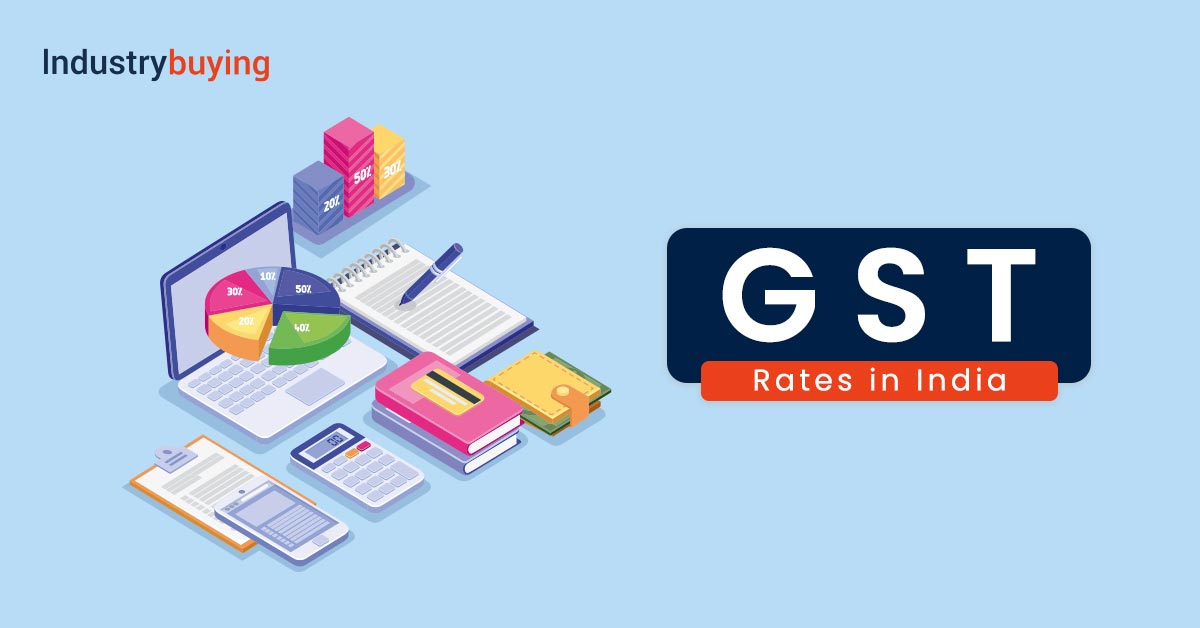
Replacing various indirect taxes, including VAT, excise duty, and service tax, GST – a unified tax system came into existence on July 1st, 2017. GST operates on many levels of rate structure, catering to diverse goods and services. In this blog, we will look into the various GST rates in India and their impact on businesses and consumers.
The basic GST slabs for taxpayers are 0%, 5%, 12%, 18%, and 28%. There are also specific categories with 3% GST on low-value items under special schemes and 0.25% for rough diamonds.
In addition to these GST rates, the law imposes a cess on the sale of certain items, including cigarettes, tobacco, aerated drinks, motor vehicles, and others, with cess rates ranging from 1% to 200%, depending on the item.
In 2025, several key GST reforms were introduced to simplify processes and enhance compliance. The GST slabs for processed food items and medical devices were reduced from 18% to 12%, making them more affordable. E-invoicing became mandatory for businesses with turnover above INR 10 crore, and GST refunds for exporters were streamlined for quicker processing. Online sellers now must comply with TCS provisions, boosting e-commerce tax compliance. Penalties for late returns were increased, while the Composition Scheme threshold for small businesses was raised to INR 2 crore. Additionally, GST on renewable energy projects was reduced to 5% to support clean energy initiatives.
GST rates are set in five primary slabs — 0%, 5%, 12%, 18%, and 28% — based on the HSN or SAC code. The 0% GST rate applies to specific essential goods such as food items and other basic necessities.
The following tables talk about specific lists of items that come under 0%, 5%, 12%, 18%, and 28% categories. Let us look at them one by one.
| Category | Tax Rates |
| Fresh Milk and Cream | 0% |
| Curd, Lassi, Butter Milk | 0% |
| Chena or Paneer | 0% |
| Eggs | 0% |
| Natural Honey | 0% |
| Fruits and Vegetables | 0% |
| Dates and Nuts | 0% |
| Coffee Beans | 0% |
| Unprocessed green leaves of tea | 0% |
| Rice, wheat, maize and other grains | 0% |
| Jaggery, Khandsari Sugar, Rab | 0% |
| Firewood or fuel wood | 0% |
| Handloom | 0% |
| Indigenous handmade musical instruments | 0% |
| Puja Samagri | 0% |
| Category | Tax Rates |
| Food and Beverages in Cinema Halls | 5% |
| Uncooked, Unfried, and Extruded Snack Palettes | 5% |
| Imitation Zari Thread or Yarn | 5% |
| Fish Soluble Paste | 5% |
| LD Slag | 5% |
| Natural gums | 5% |
| Mehendi paste in cones | 5% |
| Edible Oil | 5% |
| Cocoa Beans | 5% |
| Pizza bread | 5% |
| Namkeens,bhujia and mixture | 5% |
| Natural graphite | 5% |
| Building stone | 5% |
| Fly ash, Bio gas | 5% |
| Natural rubber | 5% |
| Silk yarn | 5% |
| Cotton sewing thread | 5% |
| Coir mats | 5% |
| Carriages for disabled persons | 5% |
| Fishing vessels | 5% |
| Aircraft MRO services | 5% |
| Category | Tax Rates |
| Condensed milk | 12% |
| Dried Nuts | 12% |
| Wool grease | 12% |
| Roasted chicory | 12% |
| Soya milk drinks | 12% |
| Granite blocks | 12% |
| Surgical rubber gloves | 12% |
| Idols of wood | 12% |
| Bamboo flooring | 12% |
| Household articles of aluminium | 12% |
| Nozzles for drip irrigation equipment | 12% |
| Bicycles | 12% |
| Contact lenses,Spectacle lenses and Frames | 12% |
| Umbrellas | 12% |
| Category | Tax Rates |
| TV upto 27 inches | 18% |
| Mobile phones | 18% |
| Washing Machine | 18% |
| Refrigerator | 18% |
| Geyser, Cooler and Fan | 18% |
| Electric Appliances | 18% |
| LPG Stoves | 18% |
| Vacuum Vessels and Flasks | 18% |
| Static Converters | 18% |
| Vegetable waxes | 18% |
| Cocoa butter, fat and oil | 18% |
| Chocolates and other food preparations | 18% |
| cakes, biscuits and bakers’ wares | 18% |
| Ice cream and other edible ice | 18% |
| Non-alcoholic beverage | 18% |
| Metal ores and Concentrates | 18% |
| Tar distilled from coal | 18% |
| Beauty or make-up preparations | 18% |
| Shaving Preparations, soaps & deodorants | 18% |
| Polishes and creams | 18% |
| Toilet paper and similar paper | 18% |
| Cigarette Filter rods | 18% |
| Electronic Toys | 18% |
| Bearings | 18% |
| Category | Tax Rates |
| Online Gaming | 28% |
| Molasses | 28% |
| Caffeinated Beverages | 28% |
| Carbonated Beverages | 28% |
| Cigars, cheroots, and cigarillos | 28% |
| Pumps for dispensing fuel | 28% |
| Air-conditioning machines | 28% |
| Aircrafts for personal use | 28% |
| Smoking pipes | 28% |
| Tobacco leaves | 28% |
The GST in India differs from the GST in other countries in several ways. Here are some of the key differences:
India’s GST rate structure, which has several slabs and categories, reflects the country’s varied economic environment and the need to strike a balance between affordability and revenue generation. Although the tiered system guarantees fair taxes on necessities, luxuries, and inferior goods, it also introduces complexity in contrast to other nations’ more straightforward systems.

.png "Consumable @Best prices A4Paper 169/Ream Only")






Subscribe to Newsletter

Sign up to get exclusive offers from our favorite brands and to be well up in the news









![10 Best Room Heaters in India [2025]](https://blog.industrybuying.com/wp-content/uploads/2024/12/Best-Room-Heaters-in-India.jpg "10 Best Room Heaters in India [2025]")