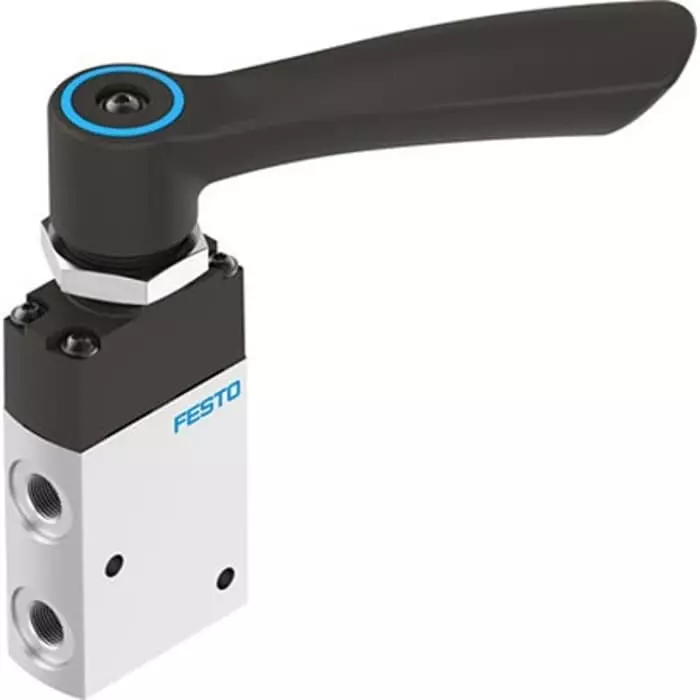
RS PRO Roller Lever 3/2 Pneumatic Control Valve, G 1/8, 1/8in Model No 2354723 is a type of valve that uses compressed air or gas to control the flow of fluids, such as liquids or gases, in a system. These valves are widely used in industrial processes and automated systems to regulate the rate of flow, pressure, temperature, or level of fluids.
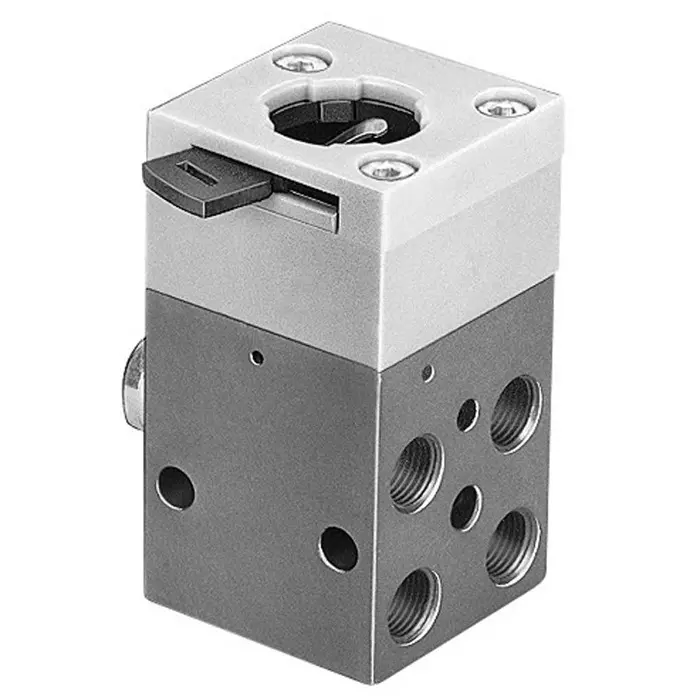
The key components of a pneumatic control valve include the valve body, actuator, and positioner. The valve body houses the flow passage and closure element, which can be a ball, plug, disc, or other configurations depending on the specific application. The actuator is responsible for operating the closure element and is powered by compressed air or gas. It converts the energy of the pneumatic signal into mechanical force to open, close, or adjust the valve position. The positioner is an optional component that ensures precise control and accurate positioning of the valve based on feedback signals from the process.
The operation of a pneumatic control valve is as follows: When a control signal is sent to the actuator, it either opens or closes the valve based on the desired process parameters. The amount of air pressure supplied to the actuator determines the position of the closure element, and consequently, the flow rate through the valve. The positioner, if used, fine-tunes the valve's position to achieve the desired flow control accurately.
Pneumatic control valves offer several advantages in industrial applications. They are quick-acting and highly responsive, allowing for precise and dynamic control of processes. Their ability to operate in high-temperature and high-pressure environments makes them suitable for a wide range of industries, including oil and gas, chemical, water treatment, and power generation.
Additionally, pneumatic control valves are known for their reliability and durability, as they have relatively fewer moving parts and are less prone to wear and tear. They also have a fail-safe feature – in case of loss of air pressure, the valve will typically fail in a safe position, either fully open or fully closed, depending on the application.
In conclusion, a pneumatic control valve is a crucial component in industrial automation, providing efficient and accurate flow control in various processes. Its ability to regulate fluid flow and pressure using compressed air or gas makes it an essential tool in optimizing and maintaining the performance of complex systems across diverse industries.